
sale
Przegląd oferty
Boguchwala, Podkarpackie
Niepełny wymiar godzin
1,200 zł - 2,000 zł Za MiesiÄ…c
19 minuty temu
Szczegóły
6836
Zdalnie
Bonus pieniężny
30-50
Umieszczone w ofercie
computer
B2B
Online Offline
Polski
Parking, Lunch card,
Junior
Pakiet relokacyjny
|Angular|
Opis oferty
Rhythm, Reflex, and Reinvention: Getting the Most Out of a Geometry Jump
There is a particular kind of pleasure in a game that asks for nothing but your attention. No inventory management, no branching dialogue trees, no sprawling map to memorise. Just a small square, a wall of spikes, and a beat that keeps moving whether you are ready or not. That is the appeal of the geometry jump genre, and few games have shaped it as thoroughly as Geometry Dash. If you have seen clips of impossibly tight jumps and wondered whether there is more to it than frantic tapping, this article is for you. We will walk through what the game actually asks of you, how to build your skills without burning out, and how to keep the whole experience enjoyable rather than punishing.
What a Geometry Jump Actually Is
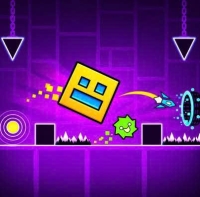
At its heart, a geometry jump is a one-button rhythm platformer. Your character moves forward automatically at a fixed speed, and your only real input is a jump. Holding the button keeps you airborne a little longer; releasing it brings you down. The challenge is not in learning complex controls but in learning when to press and for how long. Levels are built around obstacles that sync with music, so the game is as much about listening as it is about reacting.
Geometry Dash is the best-known example of this formula, and it is a good place to start because it teaches the genre's core vocabulary gently. The early levels are short, the patterns are readable, and the music gives you clear cues. You will die a lot, but each death is quick and cheap, which keeps frustration low if you approach it with the right mindset.
How the Gameplay Loop Works
A level is divided into sections, and you generally learn it in fragments rather than all at once. The first few attempts are reconnaissance: you are not really trying to win, you are trying to see what is coming. Then you start stringing together small sequences you have mastered, and slowly the level becomes a chain of familiar movements rather than a wall of unknown danger.
There are a few recurring elements worth recognising early. Jump pads launch you automatically when touched, so your job shifts from pressing to not pressing at the wrong moment. Jump orbs require a tap in mid-air, which effectively gives you a second jump. Portals change your form entirely, switching you between a cube, a ship, a ball, and other modes, each with its own physics and rhythm. Learning to read which element is coming next is the real skill, and it develops faster than you might expect.
Practice mode is the unsung hero here. It lets you place checkpoints and replay difficult sections in isolation, which turns an overwhelming level into a series of manageable puzzles. Many players treat practice mode as cheating, but that is a misunderstanding: it is a rehearsal tool, and using it well is a sign of maturity rather than weakness.
Practical Tips for Getting Better
Learn the music first. Before you worry about timing your jumps, listen to the track a few times. Most obstacles fall on beats or half-beats, and once you feel the rhythm, the visual cues become secondary.
Break levels into short chunks. Rather than thinking "I need to beat this whole level," think "I need to survive the next eight seconds." Small goals keep motivation steady and make progress visible.
Watch your hold timing. Many beginners tap too briefly on sections that require a sustained hold, or hold too long on sections that need a quick release. Pay attention to whether an obstacle wants a tap, a hold, or a release, and practise that specific motion in isolation.
Take real breaks. Geometry jump games reward fresh reflexes. If you have died twenty times in a row on the same jump, step away for ten minutes. You will often clear it on the first try when you return, simply because you have stopped tensing up.
Use practice mode deliberately. Place checkpoints slightly before the hard part, not right on it, so you rehearse the entry as well as the obstacle itself.
Compare your runs. If you are playing on desktop, record a short clip of a difficult section and watch it back. You will often spot a small hesitation or an early press that you did not notice in the moment. For players who prefer a keyboard and a larger screen, the desktop version at Geometry Dash is a comfortable way to experience the game, and the tighter input timing can make practice feel more consistent.
Do not chase difficulty too early. It is tempting to jump straight into the hardest community levels, but the official progression exists for a reason. Each tier quietly teaches a new pattern that harder levels assume you already know.
Keeping It Fun
The biggest trap in this genre is treating it as a test of worth rather than a hobby. Deaths are not failures; they are information. A level that takes you two hundred attempts is not evidence that you are bad at the game, it is evidence that the level is doing its job. Celebrate small wins, laugh at ridiculous deaths, and remember that the square does not care about your pride.
It also helps to vary your sessions. Spend one evening pushing a hard level, and the next casually replaying easier ones for the pure joy of clean movement. The genre is at its best when it feels like dancing rather than grinding.
A Closing Thought
A geometry jump is a surprisingly honest kind of game. It gives you one button, a song, and a corridor of obstacles, then asks whether you can find the rhythm inside the chaos. Whether you are clearing your first official level or chipping away at something that looks impossible, the process is the same: listen, learn, rehearse, and enjoy the small moments when everything clicks. Start simple, stay curious, and let the music carry you.

Cleveran - znajdź pracę w IT jako programista i nie tylko.