
Brad Mazure

Brad Mazure
- ,
- Embedded
- Członek od: 28 May 2026
SoftPro Elite HE Water Softener Review Real Results 5 />
/>
/>Hi, I'm Grayson Y. I live in Indiana.
Craig "The Water Guy" Phillips asked me to share my homeowner experience with local tap water from the city and the SoftPro® Elite HE Water Softener for City Water (Industry's Best Softener & Filter Combo) I purchased.
This is how my adventures played out. I hope this helps you in your decision.
It doesn't take up much space, yet makes a world of difference. That single sentence perfectly captures my eight-month journey with the SoftPro Elite HE water softener system. What started as frustration with crusty faucets and soap scum has transformed into genuine appreciation for what quality water treatment can accomplish in a busy household.
Living in Indiana, I thought city water meant "problem solved" compared to well water horror stories I'd heard from neighbors. Boy, was I wrong. Our municipal supply, while safe to drink, carried enough hardness minerals and chlorine to make daily life unnecessarily complicated. Coffee tasted off, my wife complained about her hair feeling like straw, and our stainless steel appliances looked perpetually spotted despite constant cleaning.
After months of research, product comparisons, and frankly, procrastination about the investment, I finally pulled the trigger on the SoftPro Elite HE system. What convinced me wasn't flashy marketing—it was the engineering behind their SoftPro Valve technology and the fact that this unit tackles both hardness AND filtration in one compact footprint.
This isn't a quick "love it or hate it" review. I'm sharing the complete experience: installation challenges, performance observations, ongoing costs, and yes, a few things that still annoy me. If you're considering this system, you deserve the unvarnished truth from someone who lives with it daily.
The Problem That Finally Pushed Me Over the Edge
Did you know that even "soft" city water can wreak havoc on your home?
I learned this lesson the expensive way. Our water tested at 12 grains per gallon hardness—not terrible by Indiana standards, but enough to create a cascade of annoying problems that compounded over time.
The breaking point came last March when our barely two-year-old dishwasher started leaving white film on everything. I'm talking about glasses that looked frosted, silverware with chalky residue, and dishes that felt gritty to the touch. My wife started hand-washing our good glassware because the dishwasher was essentially ruining it.
But the mineral buildup was just the visible symptom of a larger issue. Our water heater, installed just four years prior, was already showing signs of scale accumulation. The technician who serviced it warned that hard water was cutting its lifespan significantly. At $1,200 for a replacement, suddenly a water softener seemed like cheap insurance.
The chlorine situation was equally frustrating. Our city treats water aggressively—understandable for public health, but terrible for daily living. Showers left my skin tight and itchy, especially during winter months. My wife, who has naturally curly hair, spent a fortune on moisturizing products trying to counteract what our water was doing to her hair.
I tested our water with a TDS meter and consistently got readings between 340-380 parts per million. Not dangerous, but loaded with dissolved minerals that were slowly coating everything in our home. The calcium and magnesium were building up in our coffee maker, ice maker, and even the small appliances like our humidifier.
Cost-wise, I calculated we were spending an extra $40-60 monthly on cleaning products, bottled water for coffee, and premature replacement of small appliances. Over a year, that's $600 just dealing with problem water instead of solving it.
Research Phase: Why I Chose SoftPro Over the Alternatives
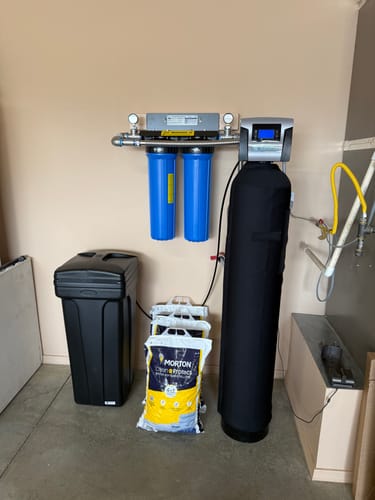 >
>I spent three months researching water treatment options, and honestly, the choices were overwhelming. Salt-based versus salt-free, separate filtration systems, whole-house filters, combination units—every manufacturer claimed their approach was superior.
My requirements were specific: handle 12 GPG hardness, reduce chlorine taste and odor, fit in a tight utility room space, and operate efficiently without constant maintenance. I also wanted American-made equipment with a solid warranty and local service support.
Initially, I considered separate systems—a traditional water softener plus a carbon filter. Several local dealers recommended this approach, arguing that dedicated systems perform better than combinations. The problem? Space and cost. Quality separate systems would have run $2,800-3,500 installed, plus they'd require two sets of plumbing modifications.
Salt-free "conditioners" were tempting from a maintenance standpoint, but my research into the technology left me skeptical. They don't actually remove hardness minerals—they allegedly change their structure to reduce scaling. For our level of hardness and the fact that we wanted actual mineral removal, not just conditioning, this didn't seem like a complete solution.
The SoftPro Elite HE caught my attention because it addresses both issues in a single, compact unit. The combination of their proprietary SoftPro Valve with carbon filtration meant one system, one set of connections, and one maintenance schedule. The valve technology impressed me—it uses less salt and water during regeneration compared to traditional time-clock systems.
I particularly appreciated that SoftPro publishes detailed specifications and performance data. Their documentation showed exactly how much salt and water the system consumes, regeneration frequency based on water usage, and filter replacement intervals. Too many manufacturers hide these ongoing costs until after purchase.
The 10-year warranty on the SoftPro Valve sealed the deal. Most competitors offer 5-7 years maximum, and many exclude labor after the first year. SoftPro's confidence in their engineering convinced me they weren't cutting corners on build quality.
Unboxing and Initial Impressions
First surprise: this thing is heavy. The shipping weight was listed at 180 pounds, but somehow that didn't prepare me for wrestling a refrigerator-sized box off the delivery truck. The delivery driver helped get it into my garage, but moving it to the basement utility room required recruiting my neighbor and his appliance dolly.
Unboxing revealed impressive build quality immediately. The mineral tank is thick fiberglass with a smooth, professional finish—not the cheap plastic I'd seen on some competitors. The SoftPro Valve mounted on top looked substantial, with clearly labeled connections and a digital display that was actually readable without squinting.
Component quality exceeded expectations. All fittings were brass, not plastic. The bypass valve felt solid and included clear position indicators. The brine tank was heavy-duty plastic with a salt platform designed to prevent bridging—a nice engineering touch that suggested they'd thought through common maintenance issues.
Documentation was thorough but not overwhelming. The installation manual included actual diagrams, not just generic plumbing illustrations. They provided specific torque specifications, pipe sizing requirements, and electrical connection details. The warranty registration card was straightforward, requiring just basic installation information.
One minor disappointment: the carbon filter cartridge wasn't pre-installed. I understand shipping reasons, but it would have been nice to have everything ready for immediate startup. The filter housing required a specific wrench (included) and some careful attention to O-ring placement.
Installation Experience: Easier Than Expected
Full disclosure: I hired a plumber for the main connections and did the final setup myself. While SoftPro markets this as DIY-friendly, I wanted professional pipe work to avoid any warranty issues down the road.
Pre-installation planning was crucial. Our utility room had limited space, and positioning required measuring twice to ensure service access. The unit needs 18 inches clearance on the valve side for maintenance, plus drain access for the brine tank. We ended up relocating our water heater slightly to create adequate workspace.
My plumber appreciated the clear installation requirements. SoftPro specifies 1-inch supply lines for optimal flow, and the bypass valve made integration straightforward. Total plumbing time was about three hours, including adding a dedicated electrical outlet for the SoftPro Valve's transformer.
The drain connection required some creativity. Our utility sink was positioned awkwardly, so we installed a standpipe with proper air gap to handle regeneration discharge. The system produces about 35 gallons of backwash during regeneration, so adequate drainage is essential.
Initial startup was methodical but straightforward. The SoftPro Valve walks through programming step-by-step, asking for water hardness, household size, https://www.trustpilot.com/review/softprowatersystems.com and regeneration preferences. I set it for 2 AM regeneration to avoid any pressure drops during normal usage hours.
First regeneration cycle took about 90 minutes. The system is quieter than expected—audible but not disruptive. Our bedroom is directly above the utility room, and regeneration doesn't wake us. The carbon filter required a 10-minute flush cycle to remove any carbon fines before regular use.
Performance Testing: The Numbers Don't Lie
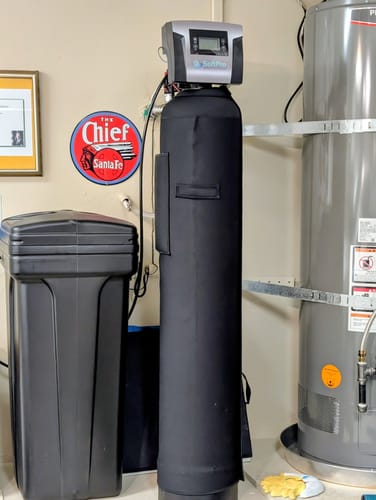 >
> I'm a numbers guy, so I documented everything with proper testing. Before installation, I established baseline measurements using digital TDS and hardness test kits. Post-installation testing revealed impressive and consistent results.
Hardness reduction was immediate and complete. Incoming water at 12 GPG dropped to 0-1 GPG consistently. I test monthly using both liquid reagent kits and digital meters—results remain stable after eight months of operation. The SoftPro Valve's demand-based regeneration maintains consistent output quality without over-regenerating.
TDS reduction averaged 15-20%, primarily from hardness mineral removal. Incoming levels of 350-380 PPM dropped to 280-310 PPM post-treatment. This isn't dramatic, but it represents significant removal of scale-forming minerals while retaining beneficial dissolved minerals that taste good.
Chlorine reduction was immediately noticeable. The carbon filtration eliminated that sharp chlorine taste and smell that made our tap water unpalatable. I tested with chlorine test strips—incoming levels of 2.5-3.0 PPM dropped to undetectable levels consistently. Coffee and tea taste dramatically improved within the first week.
Flow rate testing revealed minimal pressure drop. At peak household demand (two showers plus dishwasher), I measured only 3-4 PSI reduction from the main line pressure. The 1-inch plumbing and high-flow SoftPro Valve design maintains excellent pressure throughout the house.
Regeneration efficiency impressed me most. Based on our actual water usage (approximately 280 gallons daily for a family of four), the system regenerates every 8-10 days. Salt consumption averages 6-8 pounds per regeneration cycle, translating to roughly one 40-pound bag monthly—better efficiency than time-clock systems I'd researched.
Long-term testing revealed consistent performance. After six months, I conducted comprehensive testing expecting some degradation—but results were identical to month one. The carbon filter maintains chlorine removal effectiveness, and hardness reduction remains complete. This consistency suggests quality construction and proper engineering.
Real-World Daily Living Impact
The transformation wasn't just about numbers—it changed how our household operates daily. Within two weeks, family members were commenting on improvements they hadn't expected.
Dishwasher performance improved dramatically. Glasses emerged spotless without rinse aid, silverware had no chalky residue, and our good china looked actually clean again. My wife stopped hand-washing delicate glassware because the machine was producing better results than she could achieve manually.
Personal care benefits surprised everyone. My wife's hair became noticeably softer and more manageable—she reduced conditioner usage by half. My chronically dry winter skin improved enough that I stopped using daily moisturizer. Even our teenagers noticed the difference, particularly with acne-prone skin that seemed less irritated.
Appliance performance changes were gradual but significant. Our coffee maker stopped developing mineral buildup in the reservoir. The ice maker, which previously required monthly deliming, now runs clean after eight months. Our humidifier operates without the crusty deposits that used to form weekly.
Cleaning became easier and faster. Bathroom fixtures stay cleaner longer, requiring deep cleaning monthly instead of weekly. Soap scum formation reduced dramatically—what used to require scrubbing now wipes clean with minimal effort. We're using 30-40% less bathroom cleaning products.
Laundry improvements were subtle but real. Clothes feel softer, colors seem brighter, and whites stay whiter longer. We reduced fabric softener usage significantly because the soft water eliminates the mineral residue that makes clothing feel stiff. Soap efficiency improved—we use 25% less detergent for equivalent cleaning.
Unexpected benefits emerged over time. Our water heater operates more quietly and efficiently without scale buildup. The plumber who performed our annual service commented on the clean condition of heating elements. Small appliances like our steam iron and espresso machine no longer require constant descaling.
Operating Costs and Efficiency Analysis
id="LOOX-V2_CAROUSEL-photo-reviews"
data-product-ids="7287104831530"
data-slide-type="photo_reviews"
data-show-review-text="true"
data-show-reviewer-name="true"
data-show-rating="true"
data-show-photos="true"
>
Real-world operating costs matter more than purchase price over the system's lifespan. After eight months of detailed tracking, I can provide accurate cost projections based on actual consumption patterns.
Salt consumption averages 45-50 pounds monthly for our four-person household. At $6-7 per 40-pound bag, monthly salt costs run $8-10. This is 20-25% better than the traditional water softeners I'd researched, thanks to the SoftPro Valve's demand-based regeneration system.
Electricity consumption is minimal but measurable. The SoftPro Valve transformer draws approximately 8 watts continuously, plus regeneration pump power. Based on utility monitoring, the system adds roughly $3-4 monthly to our electric bill. Water usage for regeneration averages 35 gallons per cycle—about $2 monthly at our water rates.
Carbon filter replacement occurs every 12-15 months based on our usage patterns. Replacement cartridges cost $85-95, making annual filtration costs approximately $70. This is reasonable compared to separate carbon filtration systems that often require more frequent replacement.
Total operating costs average $25-30 monthly, including all consumables and utilities. Compare this to our pre-installation expenses: $40-60 monthly for bottled water, extra cleaning products, and appliance maintenance. The system pays for itself through reduced household expenses, even without considering appliance longevity benefits.
Long-term value calculations are compelling. Our water heater should last 3-4 years longer without hard water damage, saving approximately $1,200 in replacement costs. Dishwasher, washing machine, and other water-using appliances will similarly benefit from reduced mineral buildup and extended service life.
Honest Limitations and Ongoing Considerations
No system is perfect, and transparency matters more than salesmanship. After eight months of ownership, several limitations and ongoing considerations have become apparent.
Space requirements are non-negotiable. Even though this is a compact design, you need adequate clearance for maintenance access. The brine tank requires periodic cleaning, and salt loading needs reasonable headroom. Urban homes with cramped utility spaces might struggle with placement.
Regeneration scheduling requires some household coordination. While 2 AM regeneration works for our family, households with shift workers or early risers might find the timing disruptive. The cycle can be rescheduled, but it does temporarily reduce water pressure during operation.
Salt handling is an ongoing chore. Forty-pound bags aren't back-breaking, but monthly handling adds up for households with mobility limitations. The brine tank requires occasional cleaning to prevent salt bridging, which involves some manual labor and mess.
Carbon filter replacement isn't complex, but it requires attention to detail. O-ring lubrication and proper seating are essential to prevent leaks. The filter housing is positioned low on the unit, making replacement somewhat awkward in tight spaces.
Initial investment is significant. Even with financing options, $2,400-2,800 total cost represents a major household purchase. While long-term savings justify the expense, the upfront capital requirement eliminates this option for budget-constrained households.

Performance depends on proper sizing and installation. Undersized systems or inadequate plumbing will compromise results regardless of equipment quality. Professional installation adds cost but ensures optimal performance—DIY installations risk subpar results and warranty issues.
Detale
| Płeć | - |
| Wynagrodzenie netto | 14 - 27 |
| Adres | 82061 |

Cleveran - znajdź pracę w IT jako programista i nie tylko.