
Elsie Clemons

Elsie Clemons
- ,
- Design
- Członek od: 01 Jul 2026
6 Months Later SoftPro Elite HE Water Softener Review />
/>
/>Hi, I'm Sasha P. from Nebraska. Craig "The Water Guy" Phillips reached out to me asking if I'd be willing to share my honest homeowner experience with the SoftPro® Elite HE Water Softener for City Water (Industry's Best Softener & Filter Combo) that I installed in my home. Here's exactly how my journey unfolded with our challenging city water situation. I hope sharing these real-world details helps you make the best decision for your family.
The Hard Water Nightmare That Started It All
Did you know that Nebraska's city water can contain up to 18 grains per gallon of hardness minerals?
I certainly didn't until I started investigating why our appliances were failing prematurely and our skin felt like sandpaper after every shower.
Living in Nebraska, I thought hard water was just something you lived with. Our city water wasn't just hard—it was brutal. White crusty buildup coated every faucet, our coffee maker died after just two years, and my wife complained constantly about her hair feeling like straw. The final straw came when our water heater started making concerning rumbling noises at only four years old.
I tested our incoming water with a simple hardness test kit from the hardware store. The results shocked me: 16 grains per gallon of hardness, plus noticeable chlorine taste and a slightly metallic aftertaste that made drinking water unpleasant. Our monthly soap and shampoo bills were astronomical because nothing seemed to lather properly.
The financial impact was becoming impossible to ignore. Between replacing appliances, using excessive amounts of cleaning products, and buying bottled water for drinking, we were easily spending an extra $200 monthly on water-related problems. Something had to change.
Research Phase: Why I Chose the SoftPro Elite HE System
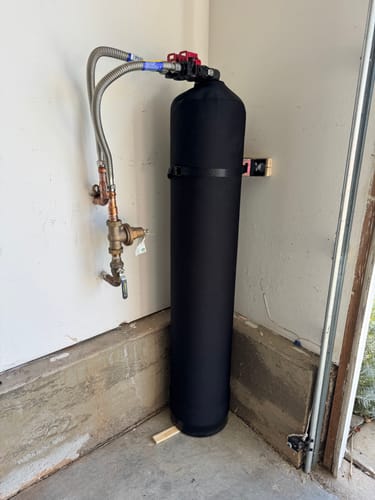 >
>I spent three weeks researching water treatment options, diving deep into the differences between salt-based softeners, salt-free conditioners, and combination systems. Most traditional softeners only addressed hardness minerals—calcium and magnesium—but didn't tackle chlorine, taste, or odor issues that were equally problematic in our situation.
The SoftPro Elite HE caught my attention because it combines true ion exchange water softening with activated carbon filtration in a single system. This meant addressing both our hardness problems and the chlorine taste that made our tap water undrinkable.
What sealed the deal was the SoftPro Valve technology. Unlike basic timer-based systems that regenerate on a schedule regardless of actual usage, the SoftPro Valve monitors real water consumption and only regenerates when needed. Living in Nebraska where water conservation matters, this efficiency appealed to me both environmentally and economically.
The system's capacity rating of 64,000 grains seemed perfect for our household of four, even with our extremely hard water. The manufacturer's calculations suggested regeneration every 8-10 days with our usage patterns and hardness levels—a frequency that seemed reasonable for maintenance.
Unboxing and First Impressions of the SoftPro System
When the SoftPro Elite HE arrived, I was immediately impressed by the packaging quality. Everything arrived in perfect condition, with each component individually wrapped and protected. The main tank felt substantial—clearly built for long-term durability rather than cheaply manufactured.
The resin tank construction caught my attention immediately. The fiberglass construction felt premium compared to plastic alternatives I'd seen, and the SoftPro Valve head looked significantly more sophisticated than basic mechanical valves on entry-level systems.
Documentation quality exceeded my expectations. The installation manual was clearly written with actual photographs rather than confusing diagrams. The warranty paperwork was comprehensive, covering the SoftPro Valve for 10 years and the tanks for even longer.
One pleasant surprise was the inclusion of a bypass valve assembly that looked professionally manufactured rather than generic hardware store components. Every piece felt like it belonged to a cohesive, well-engineered system.
Installation Experience and Initial Setup Challenges
I opted for professional installation despite being reasonably handy, primarily because our basement plumbing required some modifications to accommodate the bypass system properly. The installer arrived with all necessary fittings and completed the job in about four hours.
The most time-consuming aspect was installing the electrical connection for the SoftPro Valve and ensuring proper drainage for the backwash cycle. Our basement required a small pump to handle the regeneration discharge, which added complexity but was necessary for our situation.
Initial system programming took about 20 minutes. The SoftPro Valve interface was intuitive once I understood the menu structure. I programmed our actual water hardness level (16 grains), set the regeneration time for 2 AM to avoid disrupting daily activities, and configured the salt efficiency setting for maximum economy.
The first regeneration cycle ran that night, consuming about 8 pounds of salt and 45 gallons of water—exactly within manufacturer specifications. The system was noticeably quiet during regeneration, producing only a gentle whooshing sound barely audible upstairs.
Deep Dive: How Each Component Performs in Real-World Use
 >
> SoftPro Valve Intelligence and Control System
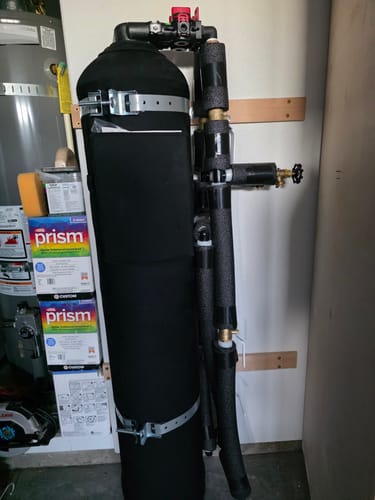
The SoftPro Valve has proven to be the heart of this system's efficiency. Rather than regenerating on arbitrary schedules, it tracks actual water usage and https://www.trustpilot.com/review/softprowatersystems.com calculates remaining capacity based on our programmed hardness level. This means during weeks when we travel or have lower usage, regeneration cycles automatically space out longer.
I've monitored the valve's calculations for six months, and they're remarkably accurate. With our 16-grain hardness and family of four, regeneration occurs every 9-11 days depending on seasonal usage patterns. Summer months with lawn watering and extra laundry push cycles closer together, while winter extends them.
Ion Exchange Resin Performance
The high-capacity resin effectively exchanges sodium ions for calcium and magnesium ions as hard water passes through. I've tested post-softener water multiple times using TDS meters and hardness test strips—consistently showing 0-1 grains of hardness even just before regeneration cycles.
What impressed me most was consistency. Even with extremely hard incoming water, the system maintains near-zero hardness throughout the entire service cycle. There's no gradual degradation in performance as the resin bed approaches exhaustion.
Activated Carbon Filtration Stage
The carbon component addresses chlorine and taste issues that softening alone couldn't fix. Our city water had a strong chlorine odor and slightly metallic taste that made drinking unpleasant. Post-treatment water tastes clean and neutral—so much so that we stopped buying bottled water entirely.
The carbon media requires replacement every 6-12 months depending on chlorine levels and usage. At six months, I'm just beginning to notice a slight return of chlorine odor, suggesting replacement time is approaching.
Salt Efficiency and Consumption
Salt usage has been very reasonable considering our extreme hardness levels. Each regeneration cycle consumes 6-8 pounds of standard salt, translating to roughly 60-70 pounds monthly. This costs approximately $15-20 per month in salt—far less than our previous expenses for bottled water and extra cleaning products.
Six-Month Performance Testing and Measurable Results
I've conducted systematic testing throughout six months of operation to document actual performance versus manufacturer claims. Using both digital TDS meters and hardness test strips, I've tracked water quality before and after treatment.
Hardness Reduction Performance:
Incoming city water consistently tests at 15-17 grains per gallon (varies seasonally). Post-softener water tests at 0-1 grains consistently, representing 95% hardness removal efficiency. Even immediately before regeneration cycles, hardness rarely exceeds 2 grains—still considered soft water.
Chlorine and Taste Improvement:
The difference in taste and odor was immediately noticeable. Chlorine smell disappeared completely, and the metallic aftertaste that characterized our city water became undetectable. Coffee and tea taste significantly better, and we've eliminated bottled water purchases entirely.
System Efficiency Metrics:
The SoftPro Valve's demand-initiated regeneration has proven highly efficient. Instead of regenerating every 5-7 days like timer-based systems, our unit regenerates every 9-11 days while maintaining excellent water quality. This represents roughly 30% fewer regeneration cycles than conventional systems.
Long-term Consistency:
Performance has remained stable throughout six months. No degradation in softening efficiency, no mechanical issues with the SoftPro Valve, and no unexpected maintenance requirements beyond routine salt refilling.
Real-World Impact on Daily Life and Household Benefits
id="LOOX-V2_CAROUSEL-photo-reviews"
data-product-ids="7287104831530"
data-slide-type="photo_reviews"
data-show-review-text="true"
data-show-reviewer-name="true"
data-show-rating="true"
data-show-photos="true"
>
The transformation in daily life has been more dramatic than I anticipated. Soap and shampoo lather immediately now, using roughly half the quantities we needed before. My wife's hair feels soft and manageable again, and our skin doesn't feel dry and tight after showers.
Appliance performance has improved noticeably. Our dishwasher produces spot-free dishes without rinse aids, and the coffee maker no longer requires weekly descaling. The water heater has stopped making those concerning rumbling noises, and our washing machine produces cleaner, brighter clothes.
Cleaning has become dramatically easier. Bathroom fixtures stay cleaner longer, and soap scum formation has virtually disappeared. Glass shower doors that once required aggressive scrubbing now clean with simple wiping.
Our monthly household expenses have decreased significantly. We've eliminated bottled water purchases (saving $40-50 monthly), reduced soap and cleaning product consumption by half (saving $25-30 monthly), and expect major appliance longevity to improve substantially.
Guests consistently comment on the water quality improvement. Several visitors have asked about the system after noticing how much better our water tastes and how thoroughly soap lathers in our bathrooms.
Operational Costs, Maintenance, and Long-Term Ownership
Monthly operational costs have been very reasonable and predictable. Salt consumption runs $15-20 monthly with our usage patterns and hardness levels. Electricity usage for the SoftPro Valve is minimal—probably adding less than $5 monthly to our utility bills.
Routine maintenance involves monitoring salt levels every 2-3 weeks and adding 40-pound bags as needed. The salt tank holds enough for roughly 5-6 weeks of operation, so refilling isn't particularly frequent or burdensome.
The activated carbon media will require replacement annually, costing approximately $75-100 depending on usage and chlorine levels. This is straightforward maintenance that doesn't require professional service.
I've had zero mechanical issues with the SoftPro Valve or any other system components. The electronic controls have been completely reliable, and the regeneration cycles run consistently without manual intervention.
Comparing total costs to our previous situation, we're saving approximately $1,200-1,500 annually between eliminated bottled water purchases, reduced cleaning product usage, and expected appliance longevity improvements. The system should pay for itself within 3-4 years.
What surprised me most was the low maintenance burden.
Beyond adding salt periodically, the system operates completely automatically. The SoftPro Valve handles all timing, calculations, and regeneration decisions without any input required from me.
Detale
| Płeć | - |
| Wynagrodzenie netto | 19 - 40 |
| Adres | 75501 |

Cleveran - znajdź pracę w IT jako programista i nie tylko.