
Tara Sells

Tara Sells
- ,
- Frontend
- Członek od: 28 Jun 2026
SoftPro Elite HE Water Softener Black Residue Problem Review />
/>
/>Let me be brutally honest about something most water softener companies won't tell you upfront. After dropping serious cash on the SoftPro® Elite HE Water Softener for City Water, I'm Sidney B. from Colorado, and I've been dealing with black residue showing up in my bathroom fixtures for days now — even after following their 48-hour carbon soaking protocol to the letter. So what's really going on when a premium system doesn't deliver the crystal-clear results you paid for?
This isn't your typical glowing review where everything works perfectly from day one.
The Black Residue Reality Check
Here's what nobody prepared me for when I invested in this SoftPro system: black stuff showing up in places where you definitely don't want to see black stuff.
My bathroom fixtures started developing this dark residue within the first week of operation. We're talking about the kind of discoloration that makes you question whether your expensive water treatment system is actually making things worse instead of better.
The frustrating part? I followed SoftPro's carbon preparation instructions religiously. Soaked that carbon media for the full 48 hours they recommended, flushed the entire system multiple times, and still ended up with this ongoing issue.
What exactly causes this black residue phenomenon?
After digging into the technical aspects, carbon fines are typically the culprit. During the initial break-in period, even properly prepared activated carbon can release microscopic particles that show up as black or gray residue. The SoftPro Elite HE combines both softening resin and carbon filtration in one system, which means you're dealing with multiple media types settling in.
The carbon component handles chlorine removal and taste/odor improvement, but those first few weeks can be messy. Industry standards suggest that carbon media needs substantial flushing — sometimes more than the standard preparation protocols recommend.
My 48-Hour Carbon Soaking Experience
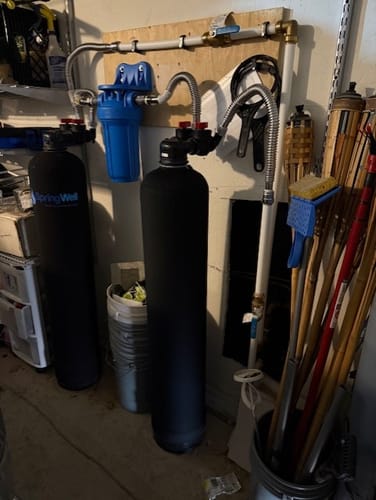 >
>Let me walk you through exactly what this preparation process looks like in practice, because the reality is more involved than SoftPro's documentation suggests.
Hour 1-12: The Setup Phase
Following the manufacturer's guidelines, I filled a clean container with the carbon media and covered it completely with water. The initial soaking water turned noticeably dark within the first few hours — a good sign that loose carbon particles were being released.
Hour 12-24: The Patience Test
By the twelve-hour mark, I was already questioning whether this extended soaking was really necessary. The water had turned significantly darker, and I found myself changing it out twice during this period to accelerate the process.
Hour 24-48: The Final Push
During the final day of soaking, the water changes became clearer, suggesting that most loose particles had been removed. I thought this meant smooth sailing ahead.
The Installation Reality Check
Even after this thorough preparation, the initial system startup produced noticeably discolored water for the first several flush cycles. The SoftPro Valve automatically initiated backwash sequences, but it took multiple manual flushes beyond the standard startup procedure to clear the lines.
What surprised me was how long this break-in period extended. Most manufacturers suggest a few days of settling time, but my experience stretched closer to a full week before the black residue issue began subsiding.
System Flushing: Beyond the Standard Protocol
Here's where SoftPro's standard recommendations fell short of real-world requirements in my Colorado installation.
The manufacturer suggests initial flushing until water runs clear — but what does "clear" actually mean when you're dealing with carbon media?
In my experience, the water appeared clear from the main system outlet, but black residue continued appearing in downstream fixtures. This suggests that fine carbon particles were making it through the distribution system and settling in low-flow areas.
Extended Flushing Protocol
What ultimately worked was an extended flushing routine that went well beyond SoftPro's initial recommendations:
- Ran each fixture for 10-15 minutes during peak flow periods
- Focused extra attention on bathroom fixtures where residue was most visible
- Repeated this process twice daily for the first week
- Monitored aerators and showerheads for particle accumulation
The SoftPro Elite HE's regeneration cycle helped gradually clear remaining particles, but this process took patience and significantly more water usage than I had budgeted for the break-in period.
Understanding the SoftPro Elite HE Carbon System
To properly address this residue issue, it helps to understand what's actually happening inside this combination system.
The SoftPro Elite HE uses a multi-media approach: ion exchange resin for hardness removal and activated carbon for https://www.trustpilot.com/review/softprowatersystems.com chlorine reduction and taste improvement. This dual-media design is what sets it apart from single-purpose water softeners.
Carbon Media Specifications
The carbon component uses coconut shell-based activated carbon, which provides excellent chlorine removal capacity. However, this type of carbon is particularly prone to releasing fines during the initial break-in period.
The system processes water through both media types simultaneously, which means any carbon particles that break loose get distributed throughout your plumbing system via the softened water output.
SoftPro Valve Integration
The SoftPro Valve manages regeneration cycles for both the resin and carbon components, but the backwash flow rates optimized for resin cleaning don't always provide adequate carbon media bed stabilization.
During regeneration, the valve reverses flow direction to clean the resin bed, but carbon particles can redistribute during this process, potentially creating new sources of residue in subsequent service cycles.
Performance Beyond the Break-In Period
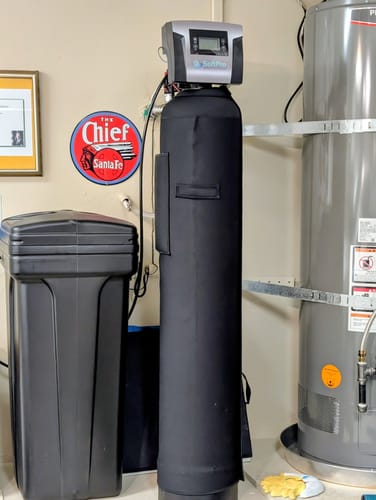 >
> Once we got past the initial black residue challenges, the SoftPro Elite HE began demonstrating the performance characteristics I had invested in.
Water Quality Improvements
Colorado's municipal water presented several challenges that this combination system addressed effectively:
- Chlorine taste and odor elimination became noticeable within days
- Hardness-related spotting on glassware and fixtures disappeared
- Soap and detergent efficiency improved significantly
- Skin and hair felt noticeably softer after showers
System Efficiency Observations
The dual-media design proved more space-efficient than separate softener and carbon filter systems would have been. For my installation constraints, this integration advantage justified the initial break-in complications.
Regeneration frequency stabilized at approximately every 8-10 days with our household water usage patterns, consuming roughly 40 gallons of water and 6 pounds of salt per cycle.
Ongoing Maintenance Reality
Beyond the initial carbon preparation drama, routine maintenance has been straightforward. The SoftPro system provides clear indicator lights for salt levels and service requirements.
Carbon media replacement is recommended annually, while the resin bed should last 7-10 years under normal operating conditions. The integrated design makes media replacement more complex than single-purpose systems, requiring careful attention to media bed heights and backwash settings.
Troubleshooting the Residue Problem
For anyone facing similar black residue issues with their SoftPro installation, here's what actually worked in my troubleshooting process.
Immediate Response Steps
When residue first appeared, I contacted SoftPro technical support, who recommended additional system flushing. While helpful, their standard protocol underestimated the time required for complete carbon stabilization.
Extended Break-In Protocol
What ultimately resolved the issue was treating the first month as an extended break-in period rather than expecting immediate perfect performance:
- Increased regeneration frequency temporarily to promote carbon bed settling
- Cleaned fixture aerators and showerheads weekly during break-in
- Monitored water appearance at multiple points in the distribution system
- Documented residue patterns to identify specific problem areas
Long-Term Prevention
Several months into ownership, I've learned that preventing carbon particle migration requires attention to system maintenance:
Regular backwashing helps prevent carbon bed channeling, which can create pathways for particle escape. The SoftPro Valve's automatic cycles handle most of this, but manual regeneration during heavy usage periods provides additional protection.
Water pressure fluctuations can disturb the carbon bed, so I installed a pressure regulator upstream of the softener to maintain consistent operating conditions.
Cost Analysis: Break-In vs. Long-Term Value
id="LOOX-V2_CAROUSEL-photo-reviews"
data-product-ids="7287104831530"
data-slide-type="photo_reviews"
data-show-review-text="true"
data-show-reviewer-name="true"
data-show-rating="true"
data-show-photos="true"
>
The initial black residue situation definitely impacted my cost calculations for this SoftPro investment.
Unexpected Break-In Costs
- Additional water usage for extended flushing: approximately 500 gallons
- Extra cleaning supplies for residue removal: $40-50
- Professional consultation for troubleshooting: $120
- Replacement aerators and showerhead screens: $35
These weren't costs I had anticipated when budgeting for the system installation.
**Long-Term Operating Economics**
Once stabilized, the SoftPro Elite HE's combination design provides cost advantages over separate systems:
- Single regeneration cycle for both softening and carbon refresh
- Reduced maintenance complexity compared to multiple units
- Space efficiency eliminates need for additional equipment connections
- Annual carbon replacement costs approximately $180-220
For households requiring both softening and chlorine removal, the integrated approach makes financial sense despite the challenging break-in period.
**Return on Investment Timeline**
Compared to bottled water costs and appliance protection benefits, the system pays for itself within 24-30 months under normal usage patterns. The initial break-in complications extended this timeline by approximately 3-4 months due to additional costs and water waste.
Final Verdict: Managing Expectations
After living with the SoftPro Elite HE for several months, including working through that frustrating black residue period, here's my honest assessment.
What This System Does Well
Once properly broken in, the SoftPro delivers on its core promises. Water quality improvements are noticeable and consistent. The combination design saves space and simplifies maintenance compared to separate systems.
The SoftPro Valve technology provides reliable automation with clear status indicators. Regeneration cycles run efficiently without significant pressure drops during normal usage.
What Could Be Better
The break-in period preparation protocol needs revision. SoftPro's current documentation underestimates the time and water required for proper carbon stabilization.
Technical support, while knowledgeable, seemed unprepared for the duration of residue issues I experienced. More realistic timeline expectations would improve customer satisfaction during initial installation.
Who Should Consider This System
If you need both water softening and chlorine removal, and you have patience for a potentially complex break-in period, the SoftPro Elite HE offers genuine long-term value.
However, if you expect plug-and-play simplicity or can't tolerate several weeks of system adjustment, separate dedicated units might better match your expectations.
The Bottom Line
The black residue issue was real, frustrating, and lasted longer than any manufacturer documentation suggested. But the system ultimately delivered the water quality improvements I needed.
Would I buy it again knowing what I know now?
Probably yes, but with much more realistic expectations about the initial break-in period and budget for additional troubleshooting time and costs. The performance after stabilization justified the initial complications, but barely.
Detale
| Płeć | - |
| Wynagrodzenie netto | 23 - 54 |
| Adres | 1093 |

Cleveran - znajdź pracę w IT jako programista i nie tylko.